WHAT I EAT IN A DAY | Luteal Phase
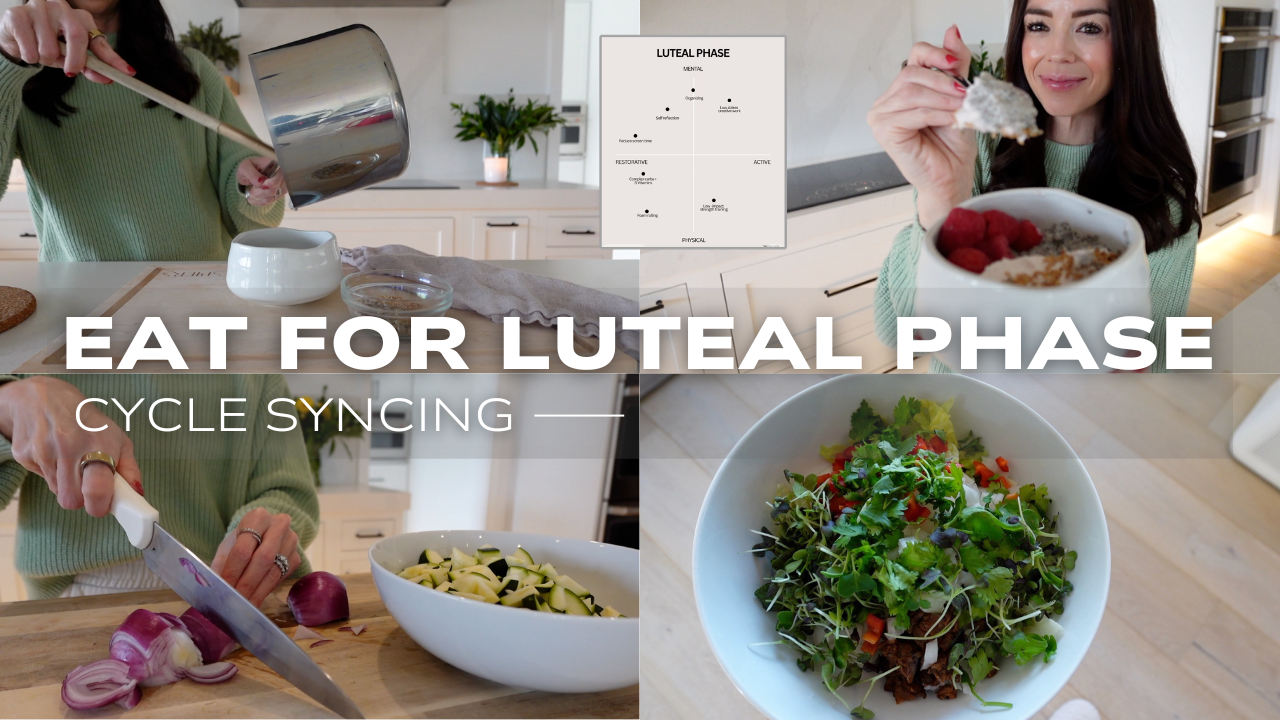
What I Eat In A Day: Luteal Phase
The luteal phase is perhaps the most misunderstood window of the entire cycle. It is the phase most often blamed for mood swings, cravings, and fatigue, when in reality, those signals are simply the body asking, quite clearly, for more. More nourishment. More rest. More grace. When we learn to listen rather than resist, this phase becomes one of the most powerful opportunities for deep hormonal support.
In my latest video, I walk through what I eat in a day during my luteal phase and how I build meals that meet the body's rising progesterone with the warmth, density, and grounding it genuinely needs.
Morning: Warm, Steady, and Intentional
The luteal phase calls for a morning that feels like a gentle hand on the shoulder rather than a sprint out the door. My first ritual, always, is my Lemon Ginger Tonic. During this phase it earns its place even more than usual. As both estrogen and progesterone begin their eventual descent, the liver is working diligently to clear excess hormones. Supporting that clearance pathway every single morning is one of the most consistent, low-effort things you can do for PMS prevention. One small cup. Every day.
From there, I move into my Protein Coffee. Rising progesterone increases the body's demand for both calories and protein during the luteal phase, which is why those late-cycle cravings are not a character flaw. They are a genuine metabolic signal. Building substantial protein into the very first thing I drink stabilizes blood sugar from the start and quiets the afternoon crash before it ever has a chance to arrive.
For breakfast, my Warm Chia Pudding is everything this phase calls for. Gently warmed chia seeds in milk of choice, topped with Greek yogurt, fresh raspberries, sesame seeds, and sunflower seeds. It is comforting, deeply nourishing, and clinically thoughtful. Sesame and sunflower seeds are the cornerstone seeds of the luteal phase in seed cycling, providing lignans and vitamin E to support progesterone production and reduce inflammation. The Greek yogurt contributes calcium and protein, both of which have meaningful research behind their role in reducing PMS symptoms. This bowl is simple. It is also doing a great deal of quiet work.
Midday: Grounding, Satisfying, and Blood Sugar-Aware
Lunch during the luteal phase is where I intentionally shift away from the lighter, brighter meals of the follicular and ovulation phases and toward something more substantial and warming. The body's basal metabolic rate rises slightly during this window, and appetite increases for good reason. Honoring that is not indulgence. It is intelligence.
My Slow Cooker Chicken and Wild Rice Soup is a luteal phase staple in this house. Tender shredded chicken, wild rice, carrots, celery, mushrooms, and leafy greens in a rich, herb-infused broth finished with a touch of coconut milk for creaminess. This meal is a masterclass in luteal phase nutrition. Wild rice delivers complex carbohydrates that support serotonin production, which naturally dips as progesterone rises. The mushrooms offer B vitamins and selenium. The greens bring magnesium, a mineral that becomes critical in the second half of the cycle for sleep quality, mood regulation, and reducing cramping. And the slow-cooked broth? That is gut-lining support in a bowl.
Evening: Deeply Nourishing, Anti-Inflammatory, and Warming
Dinner during the luteal phase is an opportunity to lean fully into the body's craving for warmth and density without a single apology. My Zucchini Beef Bowl delivers exactly that.
Thinly sliced flank steak cooked in sesame oil with coconut aminos, fresh ginger, garlic, and zucchini, finished with toasted sesame seeds and scallions over cauliflower rice. This meal is beautifully constructed for this phase. Red meat provides heme iron, zinc, and B12, nutrients that become particularly important as the body prepares for the shedding that follows. Ginger is one of the most well-supported anti-inflammatory herbs in the functional nutrition toolkit and has specific research behind its role in reducing menstrual pain. The healthy fats from sesame oil support fat-soluble nutrient absorption. And the whole thing comes together in under twenty minutes, which matters enormously when the luteal phase asks you to slow down.
Final Thoughts
The luteal phase is not something to manage or push through. It is something to meet. When we nourish this phase with warmth, protein, complex carbohydrates, magnesium-rich foods, and consistent blood sugar support, the cycle closes with far more ease than most women have been taught to expect.
The PMS that so many accept as inevitable is often, at its root, a nutritional story. And that is a story we can gently begin to rewrite, one intentional meal at a time.
Your body is not working against you during this phase. It is simply asking you to show up for it. And when you do, consistently and with care, the entire cycle begins to feel like less of a mystery and more like a rhythm you finally know how to move with.